See on Scoop.it – Higher Ed Mobile

See on www.insidehighered.com
See on Scoop.it – Higher Ed Mobile
See on www.insidehighered.com
See on Scoop.it – Higher Ed Social Media Marketing
Social media must be integrated across your organization in order to effectively leverage your employees’ strengths.
See on heidicohen.com
See on Scoop.it – Higher Ed Social Media Marketing
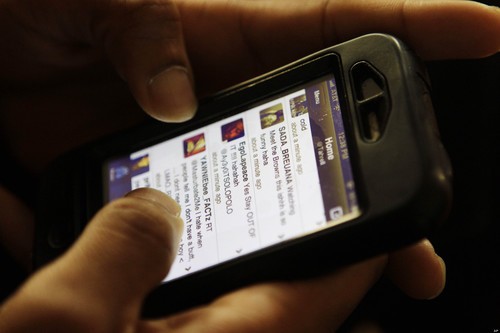
There’s no denying it: mobile devices are revolutionizing the way our students access higher education.
See on www.huffingtonpost.com
See on Scoop.it – Higher Ed Mobile
See on mobilemarketingmagazine.com
See on Scoop.it – Higher Ed Mobile
Did iOS 6 Save Mobile Advertising? – 12/10/2012
Advertising identifier’s have hit the mobile stage. Will higher Ed utilize theirs new powerful tool? If so, how and will users approve.
See on www.mediapost.com
See on Scoop.it – Higher Ed Social Media Marketing
As the cameras and screens of smartphones and tablets improve, and as wireless networks offer higher bandwidth, more companies are enabling mobile video calls.
Can higher Ed use some of these very methodologies… To build relationships with their prospects, staff, faculty, students, and alumni…
See on www.nytimes.com
Many of us are working in a more nimble manner and we have become more flexible at such a finite level and are finding new information and absorbing it, discounting it, responding to it or embracing it at an alarming rate. That is just the way ‘things’ are today; technology, communications, mobility, data democracy, cloud computing and the entire connected nature of all of us.
As we each are pulled, pushed or are doing some of the pulling and pushing of information we are still human beings. We think, we feel, we emote, we grow, we change, and because of this fact, the way in which we consume information may have evolved, but the essence of our pure/true human nature has not.
We still value honesty, authenticity, and the real-world experiences that move us at a deeper level. Basically, we each want real relationships and life experiences that bring us that sense of being alive and having a purpose to our lives.
Adverstising in the 1950’s understood this at the basic level and often tapped into it. However the mode at which we share today has changed.
A recent article on Higher Ed, branding and the landscape going forward hit on some key areas that I urge you to read. Powerful insight and perspectives to consider.
http://www.mndaily.com/2012/12/10/u-sale-branding-higher-ed
http://www.dmolsen.com/mobile-in-higher-ed/2011/02/01/results-from-higher-ed-…
There are plenty of graphic representations of these TOUCH POINTS – here are a few.
customer-touch-points.gif 557×462 pixels
Amazing graphic of customer experience touchpoints – Chief Marketing Technologist
Are you a TED talks fan? You may have seen this. Sir Ken Robinson fan? You may have seen this.

If you are doing things the way you have in the past, you may not have even heard of TED or Mr Robinson’s talks on education.
I love future technology and (in some respects) am also frightened by it. Not by it alone, but rather by our inability to adapt and utlize it in a positive growth manner.
Stop doing what worked in the past, including education, it’s not working.
“Some people say we need to raise standards…” Oh Really? What a break through!
The fact is (as shared in this video) education today is based (in great part) still on the form it was developed over a century ago. We were on horses, without telephones. Now we are not. So as everything else has changed, so too must academia from K-12 and Higher Ed as well.
Those that adapt will actually lead, those that don’t – sadly – will fall behind or worse yet be identified (wrongly) as having a disorder. Rather than me going on… see and hear for yourself a great perspective.
Here is a link to the video – ENJOY!
See on Scoop.it – Higher Ed Mobile
Forrester: Marketers Have Touchpoint Interruptus – 12/06/2012…
See on www.mediapost.com
Are you a TED talks fan? You may have seen this. Sir Ken Robinson fan? You may have seen this.

If you are doing things the way you have in the past, you may not have even heard of TED or Mr Robinson’s talks on education.
I love future technology and (in some respects) am also frightened by it. Not by it alone, but rather by our inability to adapt and utlize it in a positive growth manner.
Stop doing what worked in the past, including education, it’s not working.
“Some people say we need to raise standards…” Oh Really? What a break through!
The fact is (as shared in this video) education today is based (in great part) still on the form it was developed over a century ago. We were on horses, without telephones. Now we are not. So as everything else has changed, so too must academia from K-12 and Higher Ed as well.
Those that adapt will actually lead, those that don’t – sadly – will fall behind or worse yet be identified (wrongly) as having a disorder. Rather than me going on… see and hear for yourself a great perspective.
Here is the video – ENJOY!



 John Ayers

